

Summary
Wind energy has moved from an alternative power source to a core pillar of global energy transition strategies. This in-depth guide explains what wind energy is, how it works, its advantages and limitations, and how modern wind projects are planned, executed, and optimized. Drawing on real-world engineering practices, regulatory considerations, and infrastructure execution models, this blog connects wind energy development with carbon reduction goals and long-term sustainability outcomes.
Table of Contents
- Introduction: Why Wind Energy Is Central to the Energy Transition
- What Is Wind Energy? A Practical Definition
- How Wind Energy Works: The Complete Technical Process
- Types of Wind Energy Systems
- Key Advantages of Wind Energy
- Limitations and Challenges of Wind Energy
- Wind Energy vs Other Energy Sources (Comparative Table)
- Wind Energy Development Lifecycle: From Concept to Commissioning
- Role of Balance of Plant (BOP) in Wind Projects
- Wind Energy and Climate Adaptation: What’s Changing
- Commonly Asked Questions About Wind Energy (Answered)
- Future Outlook: Scaling Wind Energy for Carbon Reduction
- Conclusion: Building Sustainable Wind Energy Solutions
1. Introduction: Why Wind Energy Is Central to the Energy Transition
Wind energy is no longer a niche renewable option. It is now a strategic infrastructure asset for nations aiming to decarbonize power generation while ensuring long-term energy security. With global installations accelerating and turbine technology reaching unprecedented scales, wind energy has proven its ability to deliver utility-scale power with minimal environmental footprint.
From an execution standpoint, modern wind projects demand engineering precision, regulatory alignment, and integrated project management factors that define whether a project delivers predictable output over a 20–25 year lifecycle.
2. What Is Wind Energy? A Practical Definition
Wind energy is the conversion of kinetic energy from moving air into electrical energy using wind turbines. As wind flows across turbine blades, it generates lift, rotating the rotor connected to a generator that produces electricity.
Unlike fossil-fuel-based generation, wind energy does not rely on combustion, making it a zero-emission power source at the point of generation.
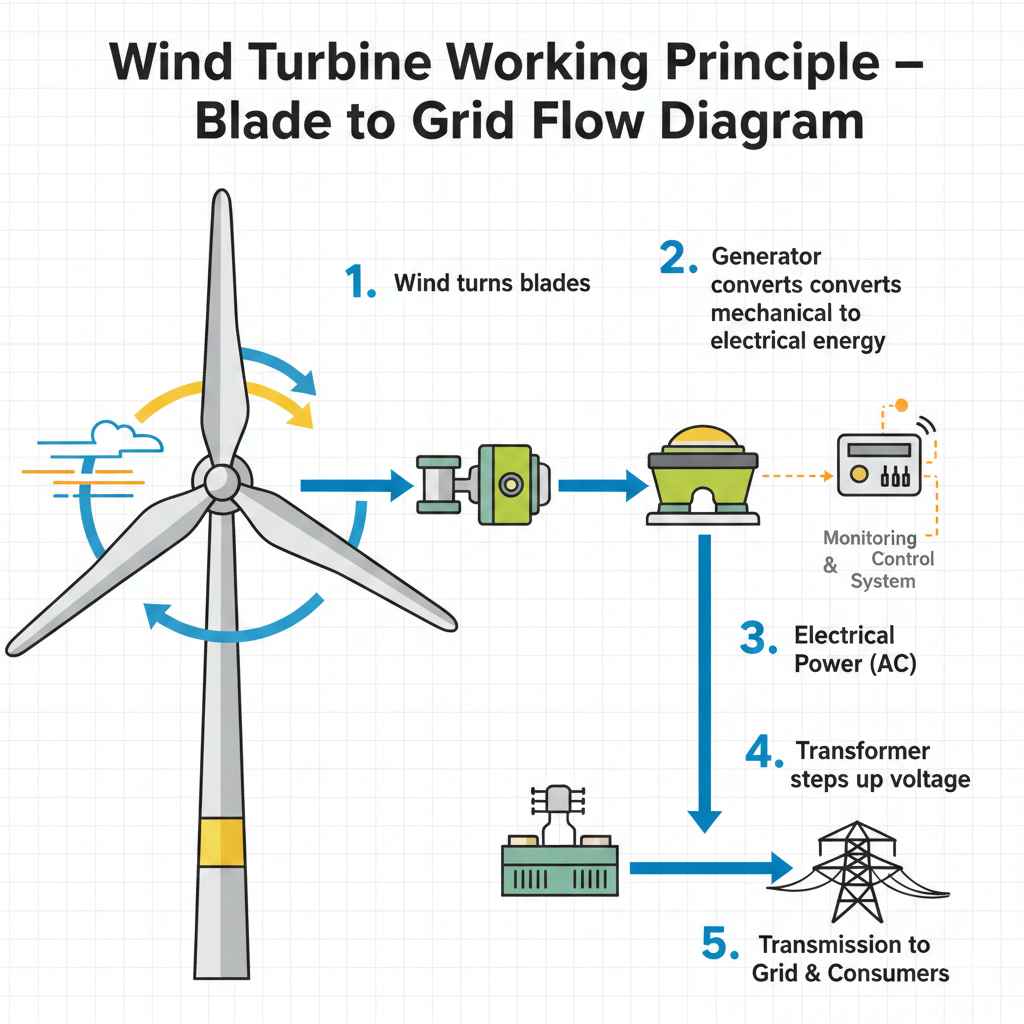
3. How Wind Energy Works: The Complete Technical Process
Wind energy generation follows a structured mechanical and electrical sequence:
- Wind Resource Capture – Wind passes over aerodynamic blades
- Rotor Rotation – Lift force rotates the rotor hub
- Gearbox & Generator – Mechanical energy converts to electrical energy
- Power Conditioning – Voltage and frequency stabilized
- Grid Integration – Power evacuated through substations and transmission lines
4. Types of Wind Energy Systems
| Wind Energy Type | Description | Typical Use Case |
| Onshore Wind | Installed on land with easy access | Utility-scale power generation |
| Offshore Wind | Installed in coastal or deep-sea areas | High-capacity, consistent wind |
| Distributed Wind | Small turbines near consumption points | Industrial or rural use |
5. Key Advantages of Wind Energy
Five Major Benefits
- Zero Carbon Emissions During Operation
- Scalable Power Generation
- Low Operating Costs After Commissioning
- Energy Independence
- Long Asset Life (20–25 Years)
The most important benefit is carbon avoidance at scale, making wind energy a cornerstone of national net-zero strategies.
6. Limitations and Challenges of Wind Energy
No energy source is without constraints:
- Intermittent wind availability
- Land acquisition and permitting complexity
- Grid stability requirements
- High upfront capital investment
- Visual and environmental considerations
These challenges are mitigated through robust project planning, advanced forecasting, and integrated BOP execution.
7. Wind Energy vs Other Energy Sources
| Parameter | Wind Energy | Natural Gas | Solar Energy |
| Carbon Emissions | Very Low | High | Very Low |
| Fuel Dependency | None | High | None |
| Operational Cost | Low | Medium | Low |
| Dispatchability | Variable | High | Variable |
| Lifecycle Sustainability | High | Medium | High |
8. Wind Energy Development Lifecycle: From Concept to Commissioning
Wind energy projects follow a disciplined execution model:
- Site Identification & Wind Resource Assessment
- Land Permits & Statutory Approvals
- Detailed Engineering & Design
- Civil, Mechanical & Electrical Execution
- Logistics & Heavy Lift Operations
- Testing, Commissioning & Grid Synchronization
Each phase must be tightly coordinated to control risk, cost, and timelines.
9. Role of Balance of Plant (BOP) in Wind Projects
BOP forms the backbone of wind project delivery:
- Civil BOP: Foundations, roads, drainage
- Mechanical BOP: Turbine erection, alignment
- Electrical BOP: Cabling, substations, grid evacuation
- Logistics: Transportation of oversized components

10. Wind Energy and Climate Adaptation: What’s Changing
Recent global developments indicate that wind projects must now account for:
- Higher wind variability
- Extreme weather resilience
- Faster regulatory approvals
- Larger turbine footprints
Engineering standards are evolving to ensure structural integrity, grid reliability, and operational continuity in changing climate conditions.
11. Commonly Asked Questions About Wind Energy
What do you mean by wind energy?
Energy generated by converting wind’s kinetic force into electricity.
What are the five advantages of wind energy?
Low emissions, renewable supply, cost efficiency, scalability, and energy security.
What is the process of wind energy generation?
Wind capture → mechanical rotation → electrical conversion → grid integration.
What’s a disadvantage of wind energy?
Power variability due to wind fluctuations.
What are five uses of wind power?
Utility electricity, industrial supply, rural electrification, grid stabilization, hydrogen production.
12. Future Outlook: Scaling Wind Energy for Carbon Reduction
Wind energy is entering a phase where scale, reliability, and integration matter more than capacity alone. Larger turbines, hybrid renewable systems, and smarter grid interfaces will define the next decade.
For stakeholders focused on sustainability, wind energy offers:
- Measurable carbon reduction
- Long-term asset stability
- Alignment with ESG and regulatory frameworks
13. Conclusion: Building Sustainable Wind Energy Solutions
Wind energy is not just about installing turbines it’s about delivering engineered, compliant, and future-ready power systems. When executed with technical discipline and long-term thinking, wind projects become reliable contributors to carbon reduction and sustainable growth.The path forward lies in precision engineering, responsible execution, and integrated project delivery, ensuring wind energy continues to power a cleaner and more resilient future.