
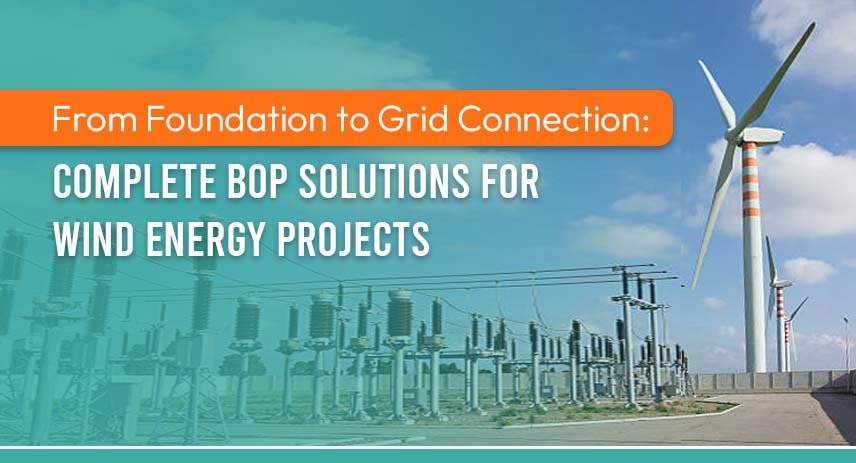
From Foundation to Grid Connection: Complete BOP Solutions for Wind Energy Projects
Summary
A wind turbine may look like a single structure rising into the sky, but behind it lies a complex system of engineering and execution. From the first excavation at site to the final grid synchronization, every stage depends on strong Wind Renewables Services and well-executed Civil, Mechanical and Electrical Balance of Plant (BOP) solutions.
If you are developing a wind energy project in India, understanding the complete BOP scope is not optional. It directly affects structural stability, commissioning timelines, energy output, and long-term returns.
This guide explains how complete BOP solutions support wind energy projects from foundation to grid connection, and why choosing the right execution partner makes all the difference.
Table of Contents
- 1. What Does “Foundation to Grid” Mean in Wind Energy?
- 2. Overview of Wind Energy BOP Solutions
- 3. Stage 1: Site Assessment and Pre-Construction Planning
- 4. Stage 2: Civil BOP - Building the Foundation
- 5. Stage 3: Mechanical BOP - Supporting Turbine Installation
- 6. Stage 4: Electrical BOP - Grid Connection and Power Flow
- 7. Project Timeline Overview Table
- 8. Technical Checklist for Developers
- 9. Common Execution Challenges
- 10. FAQs
- 11. Conclusion
In simple terms, it covers everything required to make a wind turbine operational except the turbine itself.
This includes:
- Land preparation
- Foundation construction
- Road and crane access
- Mechanical installation support
- Electrical systems
- Substation and grid connectivity
Without complete BOP solutions even the most advanced wind turbine cannot generate and transmit electricity efficiently.
Wind energy projects in India often span remote areas. That increases the importance of structured execution from day one.
2. Overview of Wind Energy BOP Solutions
Balance of Plant solutions are divided into three main areas:
2.1. Civil BOP
Infrastructure and structural works.
2.2. Mechanical BOP
Installation and structural support works.
2.3. Electrical BOP
Power evacuation and grid integration systems.
Each stage connects to the next. Delays or technical errors in one phase affect the entire project.
3. Stage 1: Site Assessment and Pre-Construction Planning
Before excavation begins, a professional Wind Renewables Services provider conducts:
- Wind resource validation
- Soil investigation
- Topographical surveys
- Access planning
- Environmental compliance checks
Soil testing is critical. Foundation design depends entirely on ground conditions. Poor assessment at this stage often results in redesign costs later.
4. Stage 2: Civil BOP - Building the Foundation
Civil works are the backbone of wind energy projects.
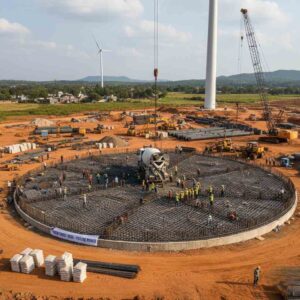
Key Civil Activities:
- Excavation and reinforcement
- Concrete foundation casting
- Anchor cage placement
- Internal road construction
- Crane pad development
- Drainage systems
Why Foundation Quality Matters
Wind turbines face heavy dynamic loads due to wind pressure and rotation. A weak foundation can lead to:
- Structural instability
- Misalignment
- Increased vibration
- Long-term damage
Well-designed Civil, Mechanical and Electrical BOP solutions begin with engineered foundation calculations based on soil reports.
5. Stage 3: Mechanical BOP - Supporting Turbine Installation
Once civil works are completed, mechanical support begins.
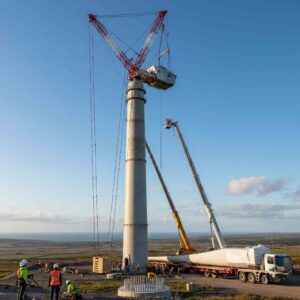
Mechanical BOP Scope
- Tower section alignment
- Nacelle placement support
- Hub and blade installation coordination
- Heavy crane operation management
- Torque and structural checks
Precision is essential. Even small alignment deviations can affect turbine efficiency. Mechanical BOP ensures that turbine components are installed safely and accurately.
6. Stage 4: Electrical BOP - Grid Connection and Power Flow
Electrical execution is the final and most sensitive stage.
Electrical BOP Components
- Transformer installation
- Internal cable network
- Switchyard construction
- Control panels and protection systems
- Substation setup
- Grid synchronization
This stage connects the wind turbine to the power network.
Electrical errors can cause:
- Delayed commissioning
- Power losses
- System tripping
- Safety hazards
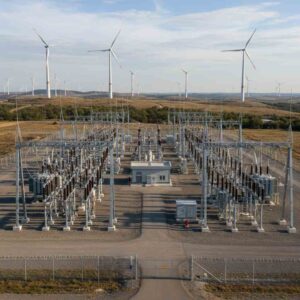
An experienced Wind Renewables Services team ensures smooth grid connectivity and compliance with state electricity board regulations.
7. Project Timeline Overview
| Project Phase | Structured BOP Execution | Poorly Managed Execution |
|---|---|---|
| Site survey | Detailed technical study | Basic inspection only |
| Foundation | Soil-based engineering design | Standard template design |
| Mechanical installation | Coordinated crane planning | Delayed alignment |
| Electrical integration | Tested and documented systems | Last-minute corrections |
| Commissioning | On schedule | Delayed grid approval |
Market Insight: Increasing Turbine Sizes in India
Modern wind turbines are larger and more powerful. Tower heights and rotor diameters continue to increase.
This shift requires:
- Stronger foundations
- Advanced lifting equipment
- Improved electrical systems
As turbine capacity grows, BOP complexity also increases. Developers must work with technically capable partners who understand evolving project demands.
8. Technical Checklist for Developers
Before finalizing your BOP partner, review this checklist:
- Proven wind energy project portfolio
- Experience in multi-state execution
- Strong civil engineering design team
- In-house electrical specialists
- Documented safety procedures
- Ability to handle remote site logistics
- Financial strength for large-scale projects
- Clear communication and milestone tracking
This structured review protects your investment.
9. Common Execution Challenges in Wind Energy Projects
Even experienced developers face practical issues:
- Remote site accessibility
- Monsoon delays
- Heavy equipment transport challenges
- Grid approval timelines
- Coordination between turbine OEM and BOP contractor
A skilled Wind Renewables Services provider anticipates these challenges and prepares mitigation plans.
Planning reduces surprises. Experience reduces risk.
Long-Term Impact of Complete BOP Solutions
Wind energy projects operate for two decades or more.
Quality BOP execution ensures:
- Stable turbine performance
- Lower maintenance frequency
- Reduced downtime
- Stronger return on investment
From foundation to grid connection, every stage contributes to project durability. Skipping quality at any stage creates problems that surface later.
10. FAQs
Q1. What are wind energy BOP solutions?
A. Wind energy BOP solutions include civil, mechanical, and electrical works required to make wind turbines operational and connected to the grid.
Q2. Why is foundation design critical in wind energy projects?
A. Foundation strength ensures structural stability and supports dynamic wind loads over long operational periods.
Q3. What does electrical BOP include?
A. Electrical BOP includes transformers, cabling, switchyards, substations, and grid synchronization systems.
Q4. How long does complete BOP execution take?
A. Timelines vary by project size, but structured planning significantly reduces delays.
Q5. Can poor BOP execution affect energy output?
A. Yes. Structural misalignment and electrical inefficiencies can reduce turbine performance and increase maintenance costs.
11. Conclusion
Wind energy projects are long-term investments. Success depends not only on turbine technology but also on execution quality.
From foundation construction to grid connection, complete Civil, Mechanical and Electrical Balance of Plant (BOP) solutions ensure structural integrity, operational efficiency, and financial stability.
Choosing the right Wind Renewables Services partner in India means selecting experience, engineering depth, and disciplined project management.
If you are planning a wind energy project, evaluate your BOP execution partner carefully. The right foundation today supports decades of reliable power generation.